A marketing budget is not a number you pick because someone told you to spend 10% of revenue. It is a diagnostic output. It should reflect what your business actually needs to grow, what your current funnel can handle, and which channels have already proven they return more than they cost.
Most small business owners get this backwards. They set a budget first and then figure out what to do with it. The ones who grow consistently do the opposite.
Here is how to think about your marketing budget in 2026 — and how to build one that is actually tied to outcomes.
What a Marketing Budget for Small Business Actually Is
A marketing budget is the total amount of money your business allocates to marketing and advertising activities over a defined period, typically a fiscal year broken into quarterly cycles.
The number itself is less important than what it represents. A marketing budget should reflect a deliberate decision about how much revenue you want to generate, what it costs to acquire a customer in your market, and which activities have the highest probability of producing that return. When those three things are aligned, the budget number becomes obvious. When they are not, you are just picking a figure and hoping.
The cost of digital marketing for small to mid-size businesses runs between $2,500 and $12,000 per month on average, and around 55% of SMBs spend less than $50,000 per year. Those numbers give you a range. They do not tell you where you should be. SellersCommerce
The Benchmark Everyone Cites and Why It Is Only Half Useful
Most industry studies suggest that small businesses spend between 5% and 10% of their total revenue on marketing. A company generating $500,000 in annual revenue might allocate $25,000 to $50,000 annually as its small business marketing budget. HubSpot
The U.S. Small Business Administration recommends that businesses with revenues under $5 million allocate 7% to 8% of gross revenue to marketing, but most small businesses fall well below that threshold. SeedProd
The percentage framework is a starting point, not a strategy. It breaks down immediately when you factor in growth stage, competitive pressure, average customer lifetime value, and how well your current funnel converts the traffic you already have.
A business with a broken funnel and a 1% conversion rate does not need more ad spend. It needs the funnel fixed first. Pouring budget into acquisition before your conversion process works is one of the most common and expensive mistakes small business owners make.
Start with revenue targets instead. If your goal is $1 million in annual revenue, a 7% to 10% marketing allocation puts your budget between $70,000 and $100,000. From there, determine where your customers actually come from — SEO, social media, referrals, or paid channels — and allocate accordingly. HubSpot
What the 2026 Data Actually Shows
Marketing budgets have flat-lined at 7.7% of overall company revenue according to Gartner’s 2025 CMO Spend Survey, yet small businesses face a fundamentally different calculation than enterprises with dedicated marketing teams and large reserves. SeedProd
72% of marketing budgets now go toward digital channels, reflecting the measurability and cost-efficiency digital platforms offer to resource-constrained small businesses. SeedProd
Email marketing remains one of the most cost-effective channels available, with an average ROI of $42 for every $1 spent. Paid search and SEO consistently rank as the highest-priority investments for small businesses allocating digital budgets. Waypoint Converts
The channel mix matters as much as the total budget. A $50,000 annual budget concentrated in the wrong channels will underperform a $25,000 budget deployed with discipline in the right ones.
How to Actually Build Your Marketing Budget
This is the framework. It applies whether you are a local service business, an ecommerce brand, a dealership, or a professional services firm.
Step 1: Know your customer acquisition cost. Before you allocate a dollar, calculate what it currently costs you to acquire one customer across each channel you use. If you do not have this number, your budget is a guess with paperwork around it.
Step 2: Know your customer lifetime value. A $300 acquisition cost is fine if a customer is worth $3,000 over 24 months. It is a disaster if they are worth $350. LTV determines how aggressive you can afford to be with spend.
Step 3: Fix the funnel before scaling acquisition. The businesses that win are not necessarily spending the most. They are spending strategically, measuring everything, and adjusting based on results. Your competitor might be spending $10,000 per month and wasting $6,000 of it. If your landing pages, lead forms, or follow-up sequences are underperforming, more traffic makes the problem more expensive, not smaller. Genesysgrowth
Step 4: Sequence your investment correctly. Most small businesses do not fail because they spend too little on marketing. They fail because they spend in the wrong order — funding ads before fixing the website, or pushing social media before building a real SEO and brand foundation. A strong starting allocation for a growth-stage small business puts roughly 20% toward website infrastructure, 25% toward SEO, 15% toward content, 20% toward paid advertising, and 10% each toward local visibility and social. involve.me
Step 5: Set a minimum viable threshold. A minimum viable digital marketing budget is $500 to $1,000 per month — anything less does not generate enough data to optimize from. Below that threshold, you are not running a marketing program. You are making occasional bets. Genesysgrowth
Where Small Businesses Waste the Most Budget
The waste is almost always predictable. After working with small businesses across industries, the same patterns surface repeatedly.
Spending on acquisition before conversion is fixed. Traffic is not the constraint. A broken form, a slow page, a confusing offer, or a missing follow-up sequence is. Fixing those before scaling spend is the highest-leverage move available to most small business owners.
Spreading budget too thin across too many channels. Being mediocre on five platforms costs more and returns less than being excellent on two. Pick the channels where your customers actually make decisions and commit to them.
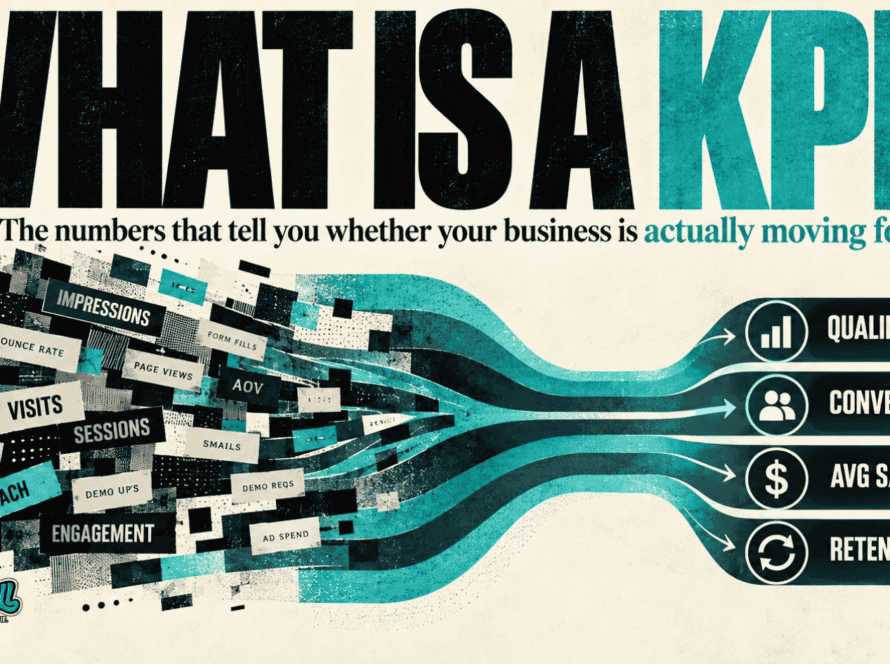
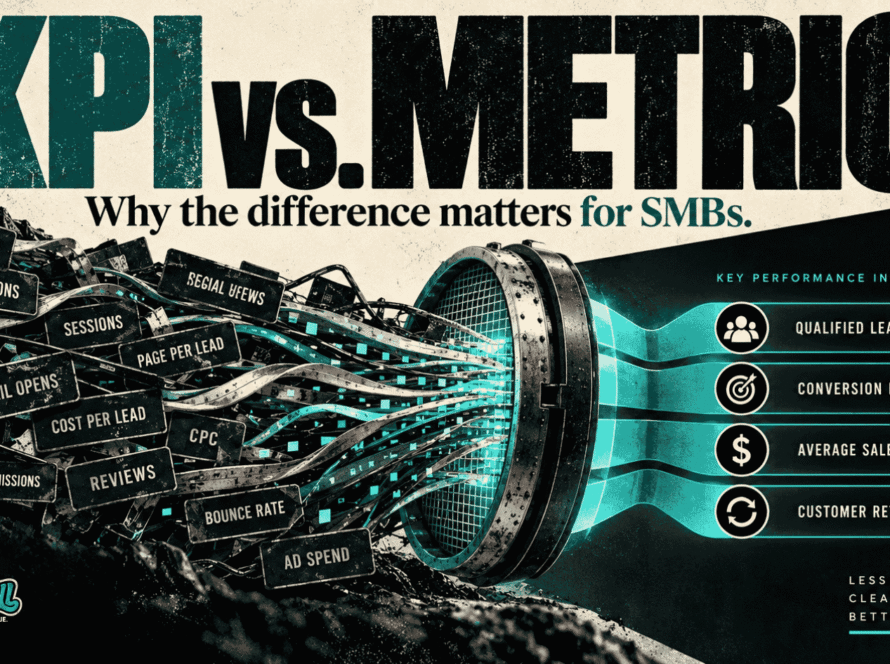
Measuring activity instead of outcomes. Impressions, followers, and clicks are not revenue. If your reporting does not connect marketing spend to leads, conversions, and revenue generated, you are flying blind on the most important financial decision in your growth plan.
Cutting marketing budget during slow periods. Slow periods are when your competitors go quiet. Maintaining consistent spend while others pull back is one of the most effective and underused competitive advantages available to small businesses.
The Right Way to Think About Marketing Spend
The real question is not how much you should spend on marketing. It is how much you can afford to invest in acquiring customers whose lifetime value far exceeds the acquisition cost. Answer that, and your budget becomes obvious. Genesysgrowth
That reframe changes the entire conversation. Marketing spend is not a cost. It is a capital allocation decision. The businesses that treat it that way — tracking return by channel, adjusting based on performance data, and reinvesting in what works — consistently outgrow the ones that pick a percentage and move on.
Your marketing budget should be the output of a revenue model, not an input to one. Build the model first. Let the number follow.
What DarkSwell Looks at First
When we audit a small business marketing budget, the first thing we look at is not how much they are spending. It is what they can currently measure.
If there is no clear line between marketing activity and revenue outcome, the budget number is irrelevant. The work starts with tracking, attribution, and funnel visibility. Once we can see what is actually producing revenue and what is producing noise, the allocation becomes a straightforward decision.
Most small businesses have more leverage in their existing funnel than they realize. Before adding budget, we almost always find places where existing spend can perform significantly better with better targeting, better conversion infrastructure, or better follow-up sequences.
More budget is sometimes the answer. But it is rarely the first answer.