

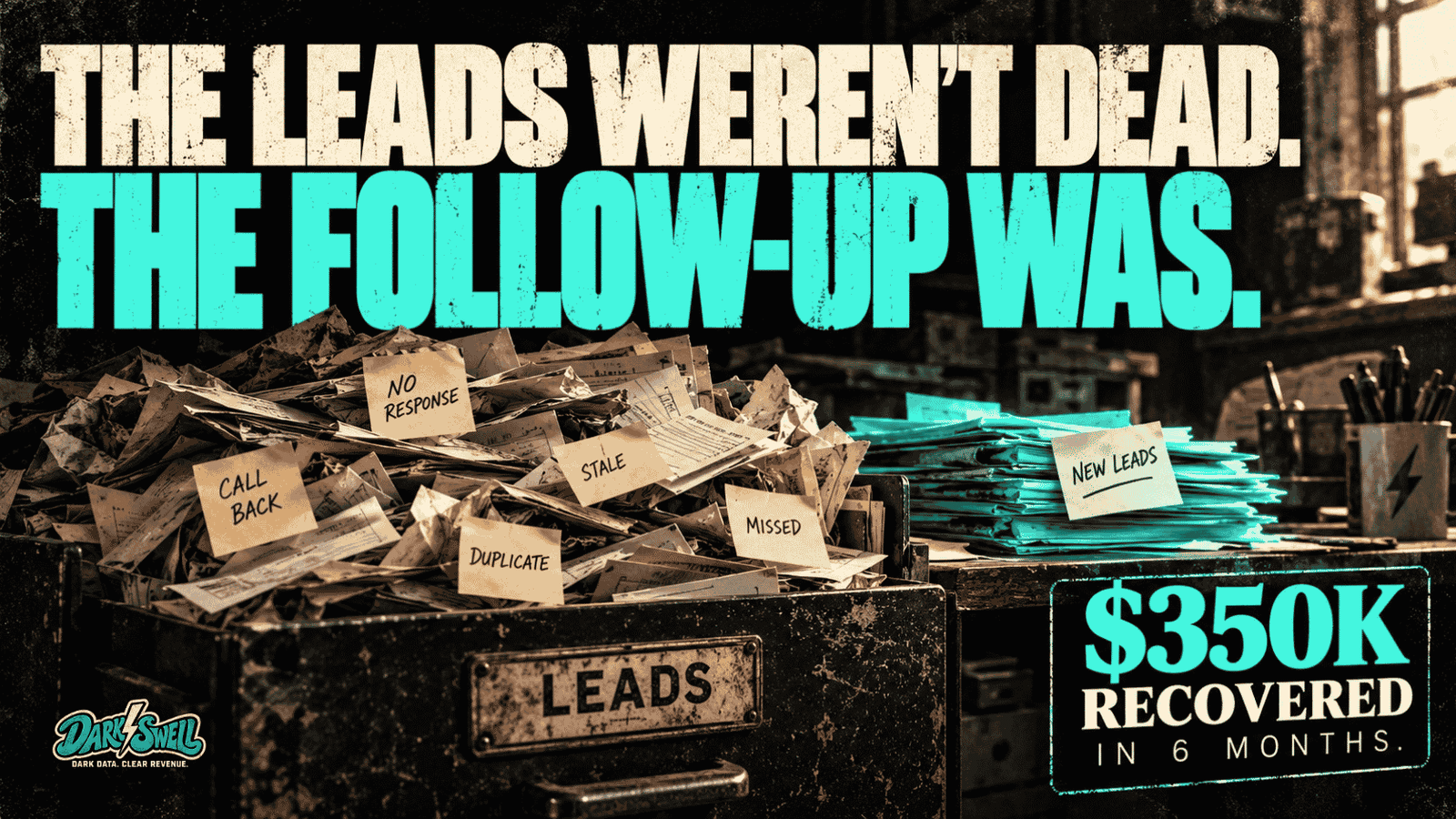
The company didn’t need more leads. It needed a better way to keep the leads it already had from disappearing.
During the COVID-era interest rate boom, a small sales team found itself dealing with a problem many growing businesses would love to have—until they actually experience it.
There were more incoming opportunities than the team could consistently follow up with.
New leads continued entering the pipeline, salespeople were busy handling active conversations, and prospects who stopped responding naturally received less attention. Some of those leads had already shown significant buying intent, but once communication slowed down, they could sit inside the pipeline for weeks while newer opportunities took priority.
On the surface, this looked like a sales follow-up problem.
The deeper problem was capacity.
The company was already generating plenty of demand. Asking the sales team to simply “follow up more” would not have solved anything. They were already busy. The opportunity was to create a system that continued working after the salesperson had run out of time.
The Business Wasn’t Short on Leads
This distinction mattered because the obvious response to slowing sales is often to generate more leads.
Run another campaign. Increase the advertising budget. Drive more traffic. Put more opportunities into the top of the funnel.
But more leads would have made this particular problem worse.
The business had already spent the money and effort required to attract these prospects. They had raised their hands, provided their information, and entered the sales process. Many had already spoken with a salesperson.
The leak happened later.
When a prospect stopped replying, the salesperson eventually had to decide how much more time to spend pursuing them. With new leads continuing to arrive, the newest and most responsive opportunities naturally received attention first.
That is a rational decision for an individual salesperson.
Across an entire business, however, it can create a large pool of forgotten revenue.
Building Follow-Up Around the Way the Team Actually Worked
The system needed to make the sales team’s job easier, not introduce another process they had to remember.
So the salesperson was given one simple responsibility.
When a prospect had stopped responding, the rep could mark the lead as non-responsive.
That status change moved the opportunity out of the active sales pipeline and into a separate follow-up process. From there, automated email communication continued nurturing the prospect without requiring the salesperson to manually remember who needed another email, when they should receive it, or how many follow-ups had already been sent.
The active pipeline became cleaner because salespeople could concentrate on the prospects who were currently engaged.
Meanwhile, the business stopped relying on human memory to maintain contact with everyone else.
Automation wasn’t replacing the salesperson. It was handling the repetitive persistence that became difficult when the team was busy.
If a prospect responded again, the salesperson could step back into the conversation.
Silence Isn’t the Same Thing as Rejection
One of the assumptions the system challenged was the idea that a prospect who stops responding is necessarily a lost opportunity.
People disappear from sales conversations for dozens of reasons that have little to do with whether they ultimately want to buy.
Priorities change. Work gets busy. A spouse or business partner needs to be involved. Financing gets delayed. Someone intends to call back and forgets. A prospect begins comparing alternatives and takes longer than expected to make a decision.
From the salesperson’s perspective, all of those situations look remarkably similar:
No response.
Without a process for continuing the relationship, businesses can unintentionally treat temporary silence as a permanent no.
The automated follow-up system gave those prospects an easy way to re-enter the conversation when their timing changed.
And many of them did.
Approximately $350,000 Recovered in Six Months
Over the following six months, previously unresponsive prospects began replying to the automated emails and contacting the company directly when they were ready to continue the conversation.
Sales generated from those recovered opportunities totaled approximately $350,000.
What makes that number particularly important is where the revenue came from.
There was no new lead source behind it. No major advertising campaign had to be created to generate those prospects again.
The company had already acquired them.
The revenue had been sitting inside the existing sales pipeline.
The operational change simply gave the business a better way to recover it.
The Larger Lesson: Growth Doesn’t Always Start at the Top of the Funnel
Small and midsized businesses frequently invest heavily in generating demand while paying much less attention to what happens after that demand enters the organization.
Marketing produces leads. Sales works the pipeline. Customer service handles customers. Each department understandably focuses on its own responsibilities.
Revenue can disappear in the spaces between them.
A lead waits too long for a response. An estimate never gets followed up on. A prospect goes quiet and disappears. A customer never receives another offer after their first purchase. An old customer would happily return, but nobody ever contacts them again.
Individually, those moments may not look significant.
Across hundreds or thousands of customers and prospects, they can represent a substantial amount of unrealized revenue.
That is why the most valuable growth opportunity inside a business isn’t always another advertising channel.
Sometimes it is finding the places where demand already exists—and figuring out why some of it never becomes revenue.
What opportunities are you already paying for that are quietly disappearing inside your business?