Most businesses respond to declining conversion rates the same way. They increase the ad budget. They test a new creative. They rebuild the landing page from scratch based on someone’s opinion about the color of the button.
None of that addresses the actual problem.
Marketing funnel optimization is the systematic process of analyzing, testing, and improving every stage of the customer journey to increase conversion rates. The word that matters most in that definition is systematic. Not occasional. Not reactive. Systematic. FeedSpot
The businesses that compound their conversion performance over time are not the ones running the most tests. They are the ones who built a repeatable process for finding where the funnel breaks and fixing it before throwing more money at the top.
What Marketing Funnel Optimization Actually Is
Optimization is not a campaign tactic. It is a discipline applied to the entire path from first awareness to completed conversion.
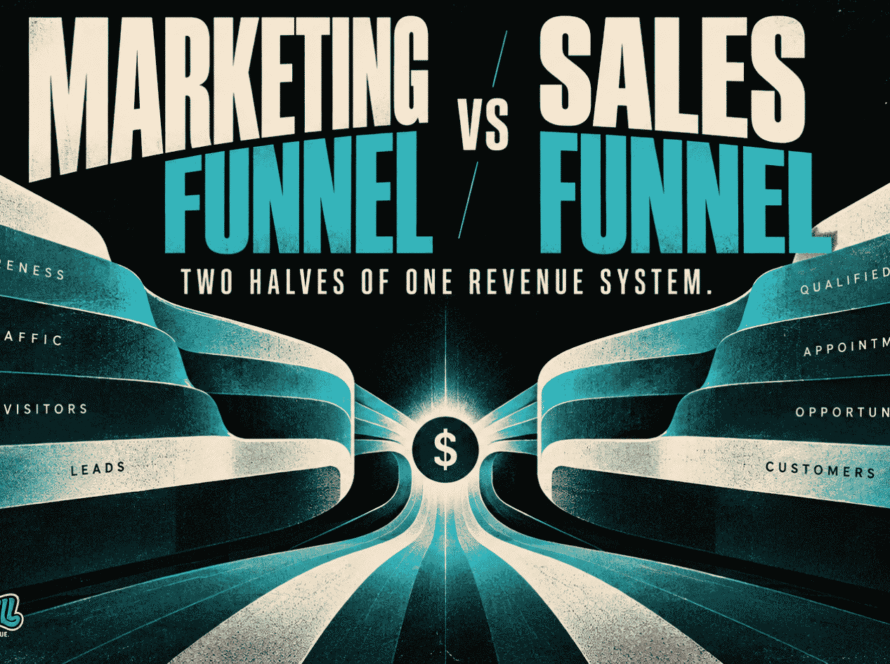
Every marketing funnel has stages. Awareness, where prospects first encounter your brand. Consideration, where they evaluate whether you are relevant to their problem. Intent, where they signal readiness to act. Conversion, where they complete the goal. Retention, where they return and refer.
Most businesses optimize one stage in isolation and wonder why the overall numbers do not move. Strong awareness with weak consideration messaging wastes qualified traffic. High-intent traffic with poor conversion infrastructure loses recoverable revenue. Excellent landing pages with misaligned creative attract the wrong visitors in the first place. When stages are optimized in isolation, the improvements cancel each other out. When they are aligned, each stage amplifies the effectiveness of the others. Fueler
That is the entire premise of marketing funnel optimization. Not better ads. Not a prettier landing page. A connected system where every stage is pulling in the same direction.
The Visibility Problem Most Businesses Have
You cannot optimize what you cannot see.
This sounds obvious. In practice, most small and mid-size businesses are making optimization decisions based on blended data that hides more than it reveals. They see overall conversion rate. They see total traffic. They see total leads. None of those numbers tell them where the funnel is actually breaking down.
If you have strong impression and click volume but weak landing page conversions, the problem is not traffic quality. It is landing page effectiveness. If landing page conversion is strong but pipeline velocity is slow, the problem is in the nurture sequence or the sales handoff, not acquisition. Each diagnosis leads to a different fix. Without the right visibility, you are guessing which problem to solve. Annebronte
The foundation of any optimization effort is stage-by-stage data. You need to know the conversion rate at every step of your funnel, segmented by traffic source, device, and audience type. Once that visibility exists, the leaks become obvious. Before it exists, optimization is just expensive guesswork.
The Top of the Funnel: Awareness and Acquisition
The top of the funnel is where most businesses over-invest before fixing what comes after it. More traffic into a broken funnel produces more wasted spend, not more revenue.
That said, awareness optimization matters. The quality of traffic entering your funnel determines the ceiling on everything downstream. Creative is your first qualification layer. It determines whether the right person clicks, not just whether someone clicks. That distinction separates effective acquisition from wasted spend. Strong creative communicates product relevance, use case, outcome, and emotional hook within seconds. Fueler
If your awareness campaigns are generating clicks but those visitors bounce immediately, the creative is attracting the wrong audience. The message that got the click is not matching the experience they find when they arrive. That mismatch is not a landing page problem. It is a message continuity problem that starts at the creative level.
First-party data has become an essential asset for modern marketers — helping target genuinely interested prospects and manage privacy standards effectively. Broad targeting with generic creative produces broad, unqualified traffic. Specific messaging built around specific audience signals produces smaller but significantly more convertible traffic pools. Fandom
The Middle of the Funnel: Consideration and Nurture
The middle of the funnel is where most revenue opportunities are lost quietly and without anyone noticing.
A prospect who visited your pricing page and did not convert is not gone. A lead who opened three emails and clicked nothing is not disengaged. These are signals. They indicate interest that has not yet found enough friction-reduction to move forward.
The middle of the funnel is where most funnels fail. High-intent users arrive ready to move forward and encounter a long generic form asking for twelve fields of information upfront. That friction kills momentum instantly. Medium
Middle-funnel optimization is about reducing the resistance between interest and intent. That means nurture sequences that speak to where the prospect actually is, not a generic drip campaign blasting the same content to every lead regardless of behavior. It means retargeting that progresses the conversation instead of repeating the same awareness-level message to someone who has already seen your pricing page twice.
Some channels generate quick wins. Others play the long game. LinkedIn might average a 60-day time-to-conversion while Google converts in 7 days. Both can be valuable, but they require fundamentally different optimization approaches. Without cohort tracking, you might pause a campaign just as it starts delivering results. Annebronte
Middle-funnel optimization requires patience and the right measurement window. If you are evaluating nurture performance on a 7-day lookback, you are making decisions based on incomplete data for most of your audience.
The Bottom of the Funnel: Conversion and Friction
The bottom of the funnel is the most technically optimizable part of the entire system. It is also where small improvements produce the largest immediate revenue impact.
The gap between average and top-performing funnels at the conversion stage is almost entirely explained by how well the bottom-funnel experience reduces friction. High-performing conversion experiences break forms into multiple steps with progress indicators, use conditional logic to hide irrelevant fields, and deliver immediate feedback that makes users feel understood rather than processed. Medium
The friction points at the bottom of the funnel are almost always the same across industries: too many form fields asked too early, page load times that exceed the threshold of patience, mobile experiences that were designed for desktop, and calls to action that are vague about what happens next.
Every one of these is fixable. None of them requires a new campaign or a larger budget. They require visibility into where users are stopping and the discipline to fix the right thing instead of the most visible thing.
The Metrics That Tell You Where to Look
Marketing funnel optimization without the right metrics is renovation without a blueprint. You need to know which walls are load-bearing before you start knocking things down.
The metrics that matter at each stage are specific. At the top, cost per qualified lead by channel, click-through rate by creative and audience, and bounce rate by traffic source. In the middle, email open and click rates by segment, retargeting engagement rates, and time-to-next-action. At the bottom, form completion rate, page-to-conversion rate, and cart or checkout abandonment rate.
Track conversion rates between stages. Calculate the percentage of visitors who move from awareness to consideration, from consideration to intent, and from intent to purchase. These stage-to-stage rates reveal your funnel efficiency and show you exactly where volume is being lost. Annebronte
When you know how traffic and leads turn into revenue, you can forecast growth accurately and scale with confidence. Cost efficiency follows naturally — optimization lowers customer acquisition cost because your marketing spend converts more customers, meaning every dollar works harder. FeedSpot
How to Build a Repeatable Optimization Process
One-time funnel audits produce one-time results. The businesses that compound conversion gains over time build optimization into their operating rhythm, not their project backlog.
The process is straightforward. Establish a baseline for every stage-to-stage conversion rate in your funnel. Review those baselines weekly. When a rate drops or stagnates, investigate the qualitative evidence — session recordings, heatmaps, user feedback — to understand why before forming a hypothesis. Test one change at a time with a defined measurement window. Document the result and move to the next highest-impact opportunity.
The new standard is integrated funnel management, where optimization is a cross-functional discipline. Unified workflows smooth out handoffs between teams, keep everyone accountable for revenue, and maintain consistent messaging. When teams operate from the same data and priorities, improvements scale faster and results compound. FeedSpot
That last point is the one most businesses skip. Marketing optimizes the top of the funnel. Sales optimizes the close. Nobody owns the handoff. The biggest conversion losses in most businesses live in the gaps between team responsibilities, not within them.
Where DarkSwell Starts Every Funnel Audit
When we look at a client’s marketing funnel, the first question is always the same: where does visibility break down?
Most of the time, the analytics setup tracks traffic and tracks final conversions. Everything in between is a black box. That black box is where the revenue is leaking.
Before we recommend a single optimization, we establish stage-by-stage visibility, segment the funnel by source and device, and identify the two or three steps with the highest absolute user loss. In most cases, fixing those specific steps — before touching anything else — moves the overall conversion rate more than any campaign, creative test, or landing page redesign would have.
More traffic is not the answer to a funnel that leaks. More visibility is. Fix the leaks first. Then scale.